Begin with the people
It is tempting to plan a meal by imagining how the table will look. A more useful first question is how the people around it will feel. Think about the time of day, the space available and what kind of gathering everyone can comfortably enjoy.
Ask about dietary requirements before deciding what to serve, and be clear about what you can accommodate. Give guests a simple idea of the occasion so they know whether to arrive hungry, bring a layer for an outdoor seat or expect a relaxed evening. Consideration makes a welcome tangible before the first plate reaches the table.
Choose a meal you can inhabit
A menu should leave its cook some time to take part. Choose dishes you are comfortable preparing, with a manageable number of things that need attention at the last minute. Something familiar, served with care, can be more enjoyable to host than an ambitious sequence that keeps you in the kitchen.
Work backwards from when you want to sit down. Decide what can be prepared appropriately in advance and follow normal food safety guidance for storing and serving it. Leave a little room in the plan for ordinary interruptions. A gathering rarely becomes more enjoyable because its host is racing the clock.
Set the table for conversation
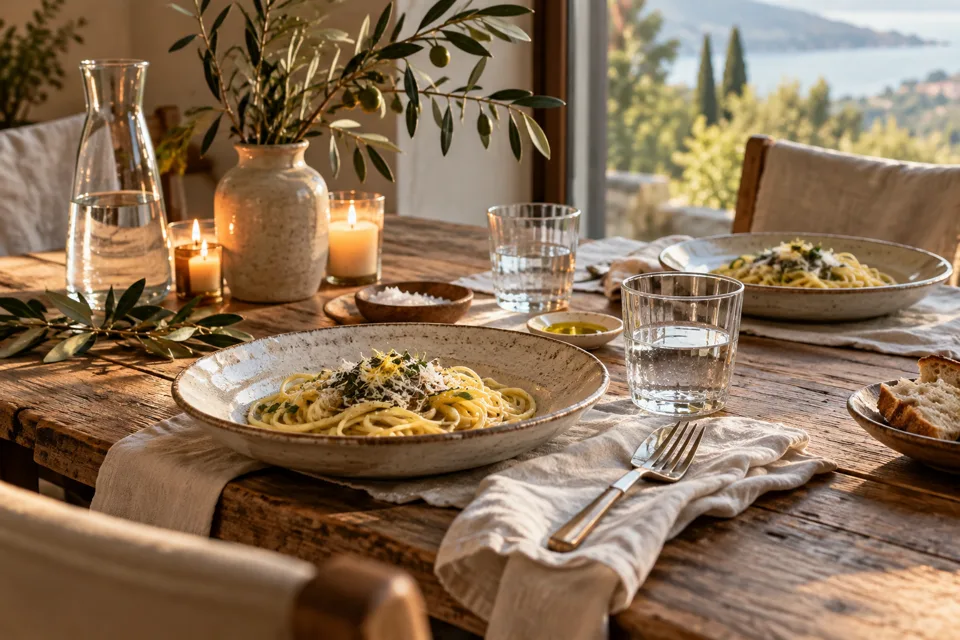
Start with the practical things: enough space for plates, a comfortable reach to shared dishes and a clear view of the people opposite. Use what you have, checking that the table works before adding anything decorative. A small arrangement can be lovely if it leaves room for the meal.
Different glasses or plates can sit happily together. Napkins can be folded simply. Put water somewhere easy to reach and make extra serving utensils available. These quiet decisions reduce the little interruptions that otherwise pull a host out of the conversation each time someone needs something.
Let the evening find its pace
Once everyone is settled, give the gathering some freedom. A good question can open a conversation, but it need not become an organised activity. Let one story lead to another and include someone who has been quiet without putting them on display.
There may be pauses, a dish that arrives later than planned or a chair that needs moving. Treat these as ordinary parts of being together. You can enjoy the care you put into the evening without requiring every detail to perform. Often the moment people relax is the moment the table becomes their own.
Make room for an easy ending
A meal does not need an elaborate final act. Something simple to finish, another glass of water and a little time before everyone leaves can be enough. Let guests depart when they need to, without making a long evening the measure of a successful one.
Afterwards, notice what made the gathering feel easy. Keep those choices for next time and simplify whatever kept you away from the people you invited. The lasting pleasure of a shared table is usually a conversation, a gesture or the feeling of having been welcome. Those are good things to build a meal around.